Difference Between Website Design and Digital Marketing
In today’s digital world, businesses must have both a strong online presence and effective promotion strategies. Two important terms often used in this context are Website Design and Digital Marketing. While they work together, they serve different purposes. Understanding the difference between them helps businesses grow online more effectively.
What is Website Design?
Website design focuses on creating and developing a website that looks professional, user-friendly, and functional. It includes planning the layout, choosing colors, fonts, images, and structuring content so visitors can easily navigate the site.
A well-designed website ensures a good user experience (UX) and attractive user interface (UI). Website design also involves technical aspects such as responsive design (mobile-friendly), page speed, and basic coding. The main goal of website design is to present information clearly and build trust with visitors.
In simple words, website design is about how your website looks and works.
What is Digital Marketing?
Digital marketing focuses on promoting your website or business online to reach the right audience and generate traffic, leads, and sales. It uses different online channels such as search engines, social media, email, and paid advertisements.
Key components of digital marketing include Search Engine Optimization (SEO), Social Media Marketing, Google Ads, Content Marketing, and Email Marketing. The main objective of digital marketing is to attract visitors, engage them, and convert them into customers.
In simple words, digital marketing is about how people find your website and take action.
Key Differences Between Website Design and Digital Marketing
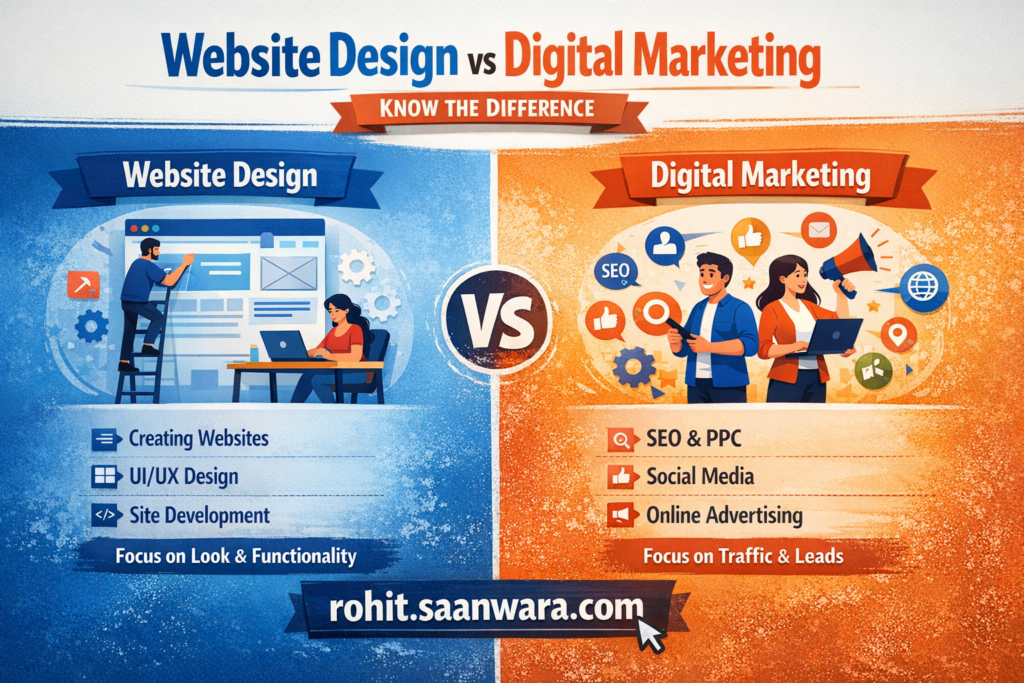
Website design is the foundation of your online presence, while digital marketing is the strategy to promote it. A website can exist without marketing, but without promotion, very few people will visit it. Similarly, digital marketing without a good website will not give proper results because visitors may leave if the site is slow or poorly designed.
Website design focuses on visual appearance and functionality, whereas digital marketing focuses on traffic, visibility, and conversions. Design works mostly before launching a website, while digital marketing is an ongoing process.
Why Both Are Important
For online success, both website design and digital marketing must work together. A well-designed website builds trust, and digital marketing brings potential customers to it. When combined, they help businesses grow, increase brand awareness, and generate more revenue.
Website Design and Digital Marketing: Key Differences Explained
Website Design and Digital Marketing are two essential parts of a successful online business. Although both work together, they have different roles and objectives. Understanding their differences helps businesses build a strong online presence and achieve better results.
1. Purpose and Goal
The main purpose of Website Design is to create a visually appealing, functional, and user-friendly website. It focuses on how a website looks and how users interact with it. A good website design helps build trust, improve usability, and present information clearly to visitors.
On the other hand, Digital Marketing aims to promote the website and business online. Its goal is to attract the right audience, increase brand awareness, and generate leads or sales. Digital marketing ensures that people find your website through search engines, social media, and online advertisements.
2. Focus Area
Website design concentrates on layout, structure, colors, typography, images, and navigation. Designers ensure the website is responsive, fast-loading, and easy to use across all devices. The focus is on creating a smooth and engaging user experience.
Digital marketing focuses on visibility, traffic, and conversions. It includes strategies like SEO, content marketing, social media marketing, email campaigns, and paid ads. The focus is on reaching potential customers and encouraging them to take action.
3. Tools and Skills Required
Website design requires technical and creative skills such as HTML, CSS, UI/UX design, graphic design, and CMS platforms like WordPress. Designers use tools like Figma, Adobe Photoshop, and web builders to create websites.
Digital marketing requires analytical and strategic skills. Marketers use tools such as Google Analytics, Google Ads, Meta Ads Manager, SEO tools, and email marketing platforms. The focus is on data analysis, audience targeting, and performance optimization.
4. Time and Cost Involvement
Website design is usually a one-time or occasional investment. Once the website is designed and launched, only updates or redesigns are needed over time. The results are visible immediately once the website goes live.Digital marketing is an ongoing process that requires continuous effort and budget. Results may take time, especially for organic methods like SEO. However, consistent digital marketing helps in long-term growth and steady customer acquisition.
5. Role in Business Growth
Website design builds the foundation of an online presence. A well-designed website creates credibility and ensures visitors stay longer and trust the brand.
Digital marketing drives growth and revenue by bringing targeted traffic to the website. Without marketing, even the best-designed website may not receive visitors. Together, website design and digital marketing help businesses grow, attract customers, and succeed online.